
Forms Ask Too Much, Too Soon
Name, email, phone, company, message. All that to ask whether you cover their neighborhood. Most people would rather not.
They were not uninterested. They wanted to know one thing, found no quick way to ask, and closed the tab. Chat catches that person before they go, gets their details, and can book them in.
Questions first? Send us a message and we will reply the same business day.
It explains what you do beautifully. Then it asks a stranger to fill in a form and wait, which is where most of them give up.
Name, email, phone, company, message. All that to ask whether you cover their neighborhood. Most people would rather not.
Even people who do fill in the form expect an answer in minutes. A next-day reply reads as disinterest.
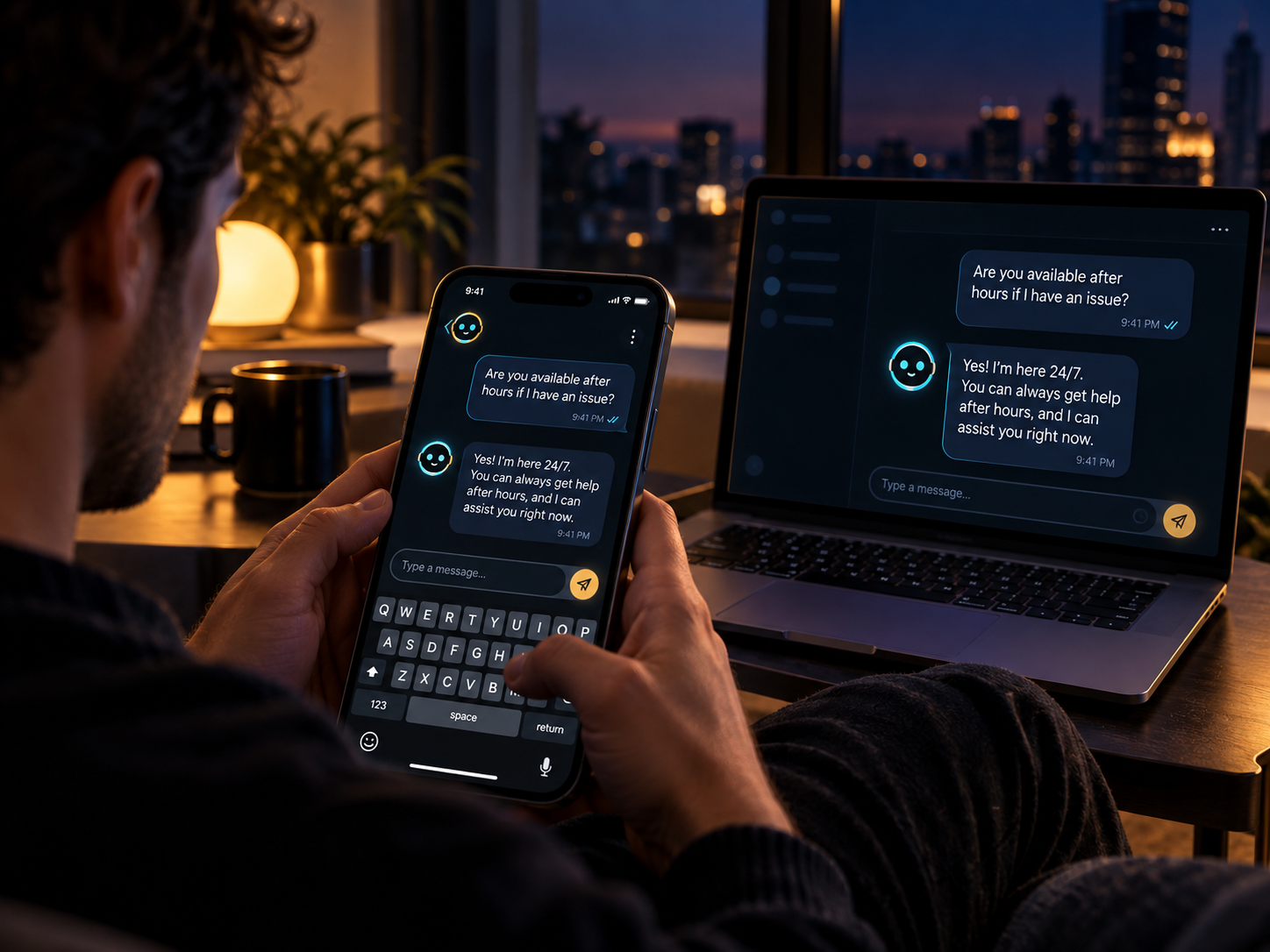
People research services in the evening and on weekends, which is exactly when there is nobody at your desk.
Do you cover my area? What does it roughly cost? How soon can you come? Answered individually, over and over, by a human.
Hundreds of visitors, a handful of inquiries. You have no idea what the rest of them wanted.
A whole category of customer would rather type than talk. If chat is not there, they simply never get in touch.
Two conversations. One the chat finishes on its own, one it knows to hand over.
Example: handled start to finish
Example: handed to a person
Chat that pretends to know everything is worse than no chat at all. Here is the honest split.
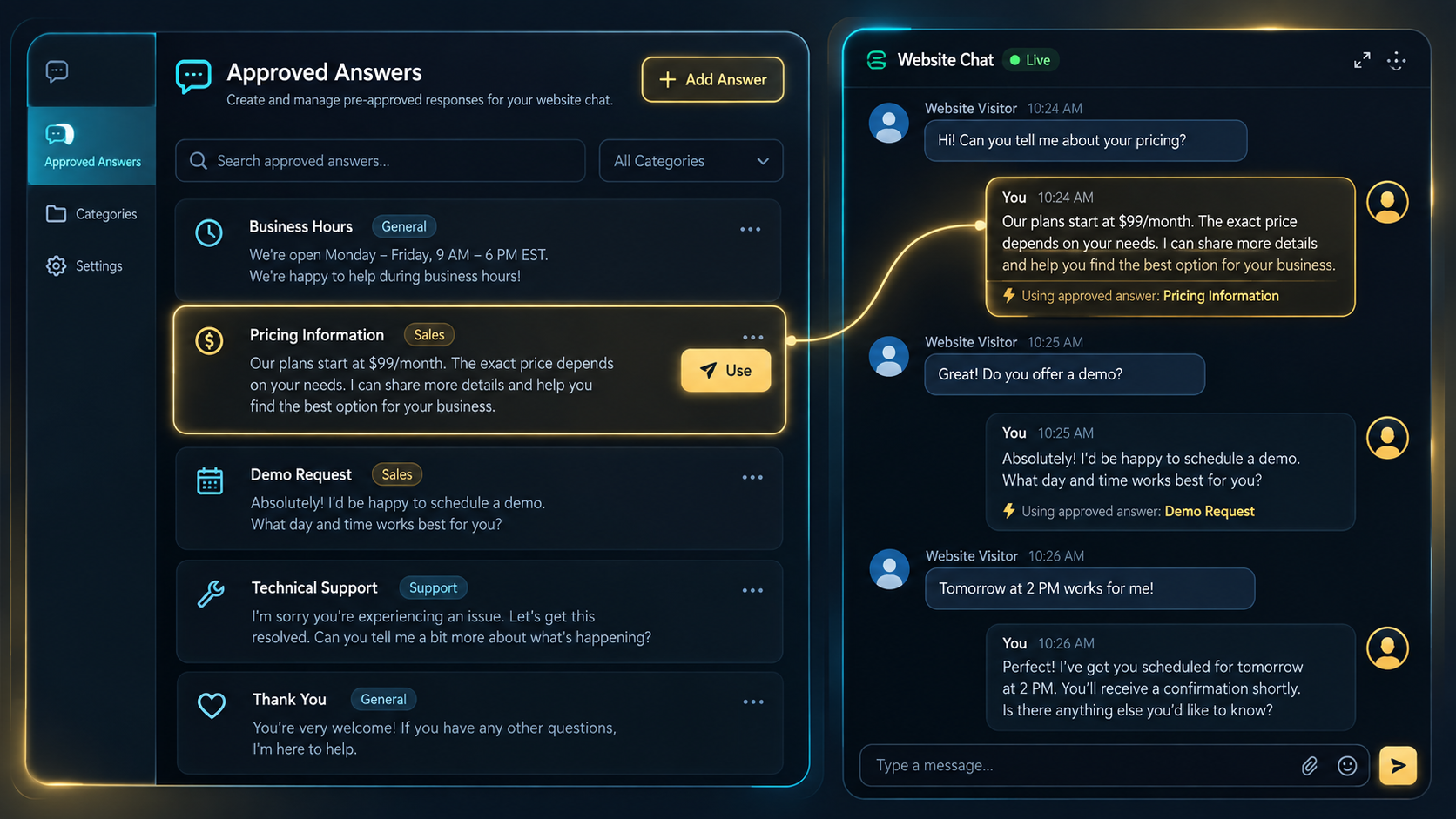
The chat is built from answers you wrote. It is not looking things up or improvising.
Every business has a short list it answers constantly. We start there, because those are the ones costing you time.
In your words. You also name the subjects it should never touch, and those get ruled out entirely.
What counts as urgent, who it goes to, and when a conversation should stop and wait for a person instead.
Every handoff tells us a question worth adding. The chat gets better because your answers get better.
Plenty of businesses install a chat widget, collect conversations in a tool nobody opens, and conclude that chat does not work.
The conversation has to go somewhere. Here it lands on the same contact record as that person's calls, texts, and appointments, so your team sees one history instead of a separate chat inbox. Follow-up continues from the chat if they went quiet. It all runs on the I Ninja App.
Chat conversations sit beside every text and email from that person.
See MessagingSomeone chatted and did not book? Follow-up picks it up from there.
See AI Follow UpReal open times offered inside the conversation, booked on the spot.
See Automated BookingSome people type, some call. Both end up on the same record.
See AI VoiceAnyone whose website gets more visitors than inquiries.
Candidates browse jobs at night and have one question before applying. Answer it then, not two days later.
Is it still available, do you allow pets, what is the deposit. Answered instantly instead of filling your voicemail.
Capture what a prospect needs before anyone picks up the thread, and flag the ones who sound like they are down right now.
Collect the basics for a quote request any hour, while anything needing a licensed answer goes to an agent.
Screen fit before a discovery call lands on your calendar, so the ones that book are worth having.
Answer the do-you-cover-my-area question while you are on a job, without stopping what you are doing.
Chat is not magic and it will not answer every question. Anyone telling you their AI handles everything a customer asks has either not tried it or is hoping you will not check. The useful version knows its limits and says so rather than inventing an answer.
It is also not free of effort on your side. The quality of the chat depends entirely on the quality of the answers you give it. Businesses that spend an hour writing good answers get something genuinely useful. Businesses that skip that step get a bot that says "let me connect you with someone" to everything, which helps nobody.
And if a visitor wants a person, they should get one quickly. We build it that way on purpose. Trapping someone in a loop with a bot is a good way to lose a customer who was ready to buy.
The ones worth knowing before you put a chat box on your site.
Yes. I Ninja LLC sets up website chat for service businesses. It answers questions the business has approved, captures contact details, asks qualifying questions, can book appointments, works outside business hours, and passes conversations to a person when needed.
No. Website chat answers questions it has been given approved answers for. Anything outside that, including firm quotes, complaints, warranty questions, and advice requiring a professional license, is handed to a person along with the visitor's contact details.
The conversation is handed over. Visitors are never trapped in a loop with automated replies. Your team receives the full conversation so the person does not have to repeat themselves.
Yes. When booking is connected, chat can offer real open times from your calendar and book an appointment during the conversation, then send a confirmation automatically. Learn more about Automated Booking.
Yes. Chat responds at any hour, which matters because a large share of people research services in the evening and at weekends. Anything it cannot answer is captured and waiting for your team in the morning.
Into the same shared inbox as text messages and email, attached to that person's contact record. Your team sees one history for each customer rather than a separate chat tool nobody opens. Learn more about Messaging.
The chat is set up to be straightforward about what it is and to hand over to a person when asked. We do not recommend pretending an automated chat is a human, because people usually work it out and it damages trust.
The main effort on your side is providing good answers to the questions you already get asked, which usually takes about an hour. I Ninja LLC handles the rest of the setup and keeps improving the answers based on real conversations.
I Ninja LLC is based in Trinity County, California and serves businesses across the United States. You can reach the company by email at [email protected] or through the contact page.
Bring the five questions you answer most often. Fifteen minutes is usually enough to see whether chat would catch the people you are losing.